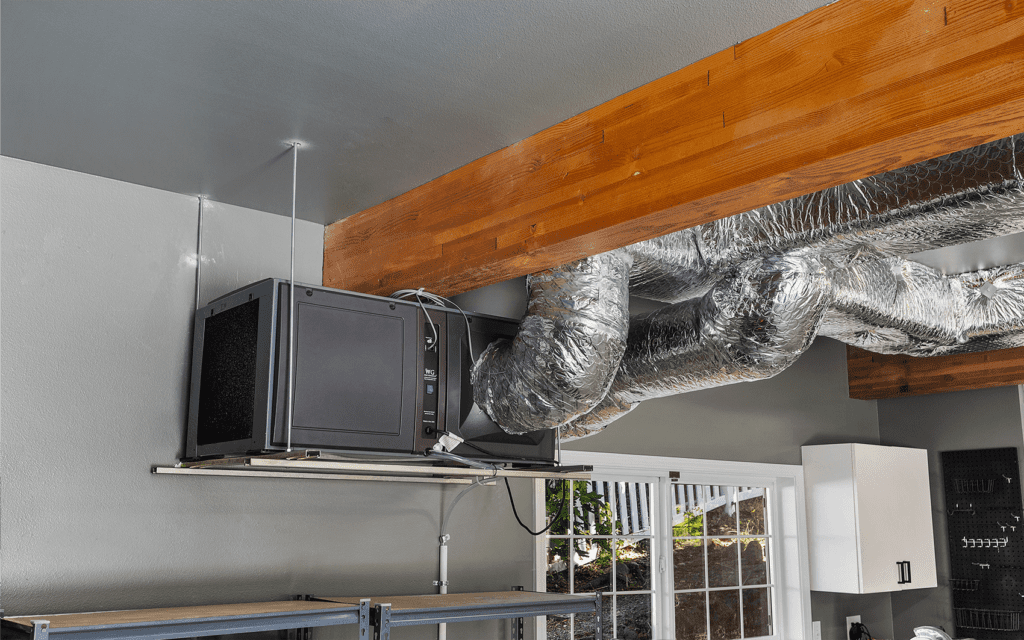
Not all wine cellar cooling systems are built the same, and picking the wrong one can compromise years of aging potential. The right system for you depends on a few key factors, like your cellar’s size, budget, and acceptable noise level. Here’s a breakdown of the five main types of wine cellar cooling systems and how each works.
Self-Contained/Through-the-Wall Systems
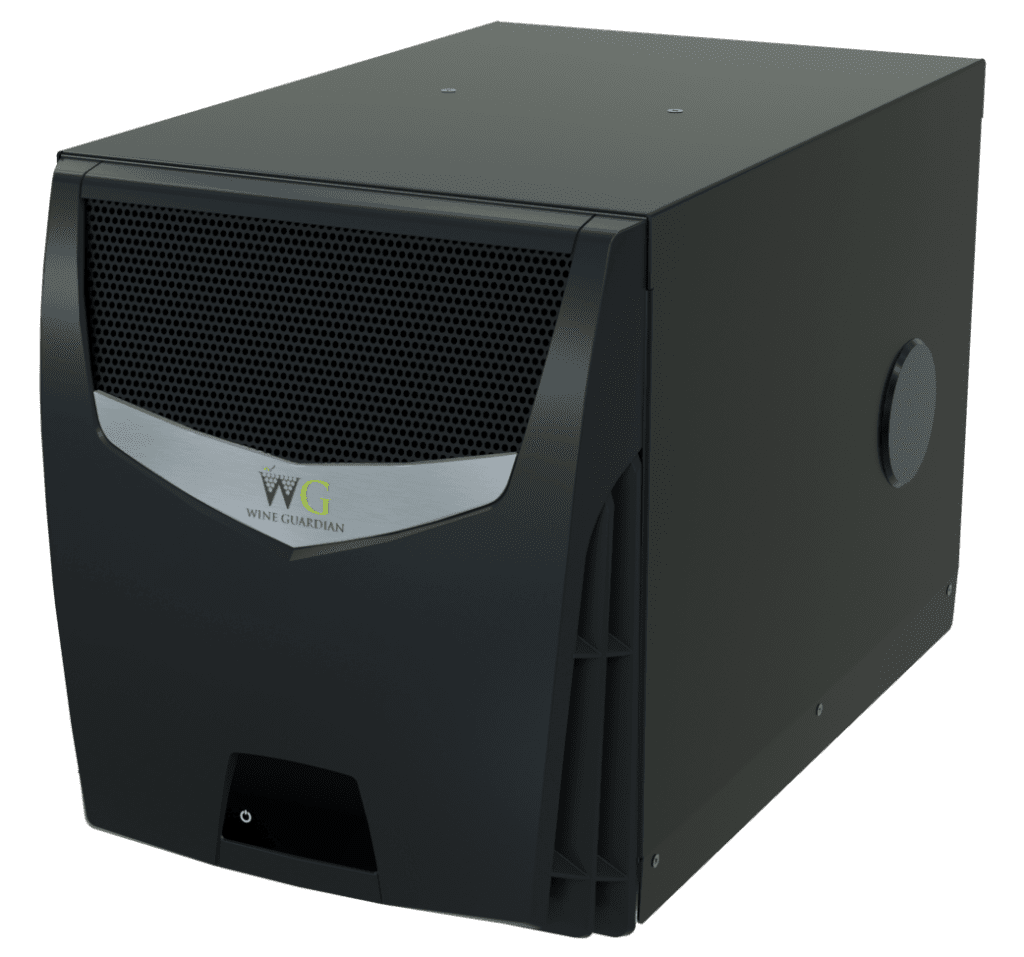
Through-the-Wall (TTW) systems are the quickest, easiest, and most affordable way to get your wine cellar up and running.
A TTW unit is entirely self-contained and mounts through a single opening in the wall of your cellar, similar to a traditional window air conditioner in a home. The unit vents its exhaust and condensation at the rear, which means you’ll need additional interior space on the other side of the wall.
Despite their seemingly basic nature, through-the-wall units are sleek and stylish, offering features like temperature and humidity monitoring, touchscreen controls, wireless remote operation, alarm capabilities, and even an optional electric heater for operation in cold environments. Through-the-wall units can also be paired with a freestanding humidifier to create optimal storage conditions.
Pros:
- Simple installation
- Lower upfront cost
- Good fit for small to medium cellars
Cons:
- Noise is audible on both sides of the wall
- There must be an adjacent room to vent warm air
- Less flexible for custom or concealed installations
If simplicity and relative affordability are priorities, or if you prefer to do things yourself, this plug-and-play option may be perfect for you.
Fully Ducted Systems
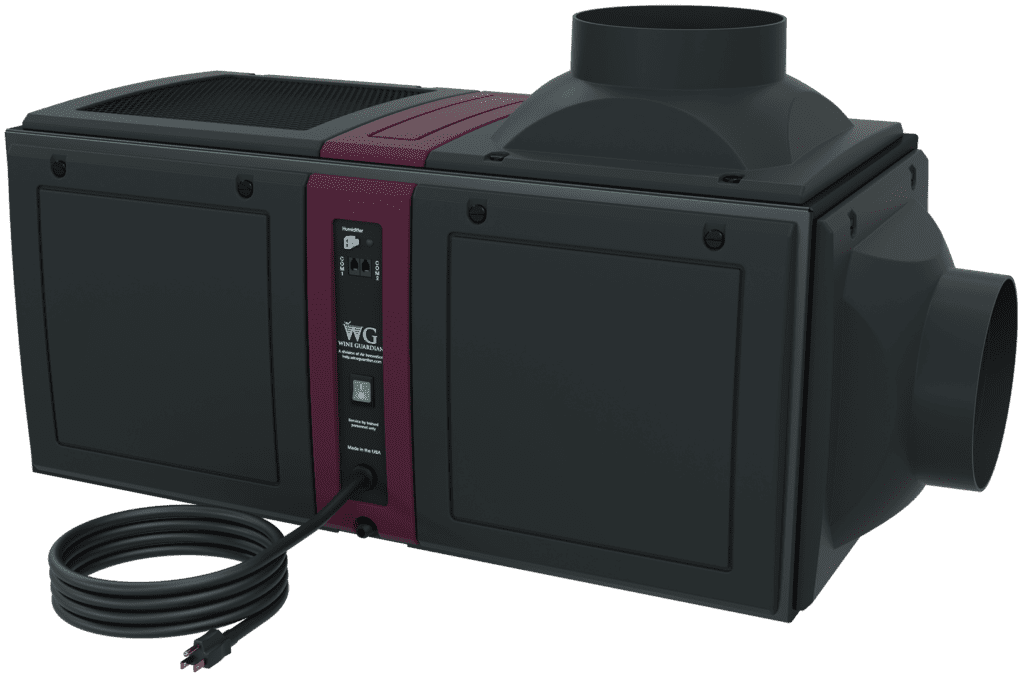
Like TTW units, ducted wine cellar cooling systems are completely self-contained, with the evaporator, fans, compressor, condenser, and controls all in one unit. The unit is typically mounted outside the cellar (in an area like a mechanical room or crawlspace), and the air is carried into the cellar through flexible ductwork.
Because the system is situated independently of the cellar space, ducted units are quiet and unobtrusive. Plus, they don’t take up any physical room inside the cellar, which means every inch of your space can be used to store wine.
Installation of a ducted system is relatively easy, and since there isn’t any copper tubing or plumbing required, it can be installed by a basic contractor or handyperson without the assistance of a licensed contractor. This makes it a great choice for the collector with a modest budget.
Pros:
- The unit can be located outside the cellar
- Quieter inside the cellar
- Works well for custom builds where aesthetics matter
Cons:
- Requires ductwork design and planning
- Higher installation complexity and cost
- Noise in the space where the unit is installed
Ducted Split Systems
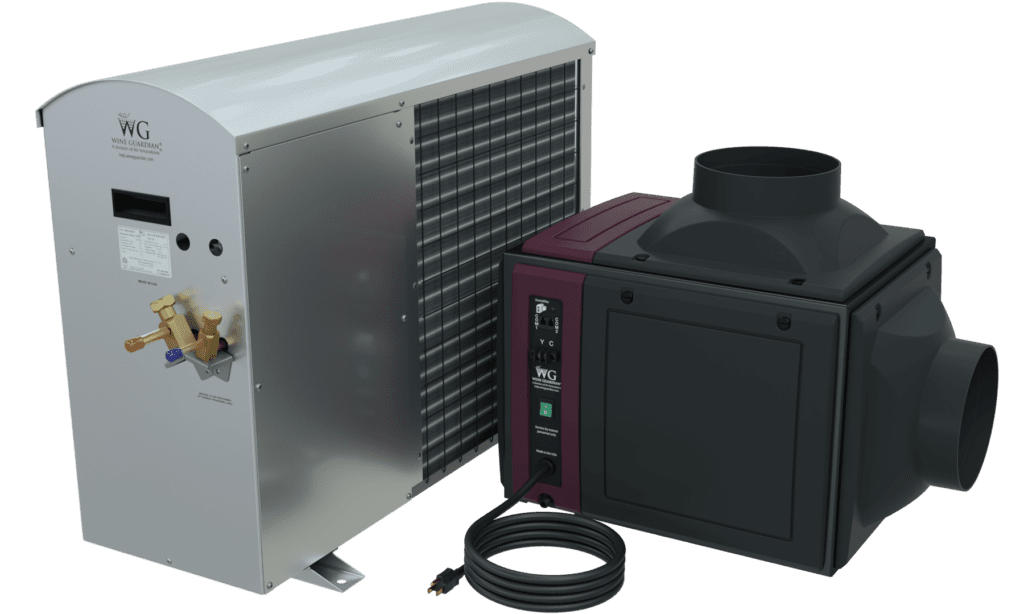
A ducted split wine cellar cooling system features independent evaporator and condenser units. The condenser can be placed outside the cellar or home, making for a smaller interior footprint. The evaporator is also located outside the cellar (in a crawlspace, utility room, etc.) and connected by ductwork.
This design makes it great for cellars where space is limited. The split configuration also enables an installer to run longer duct runs than those of a self-contained ducted system.
Since split systems are mounted outside the cellar, they create a space that is quiet, vibration-free, and maximizes the room for storage.
Pros:
- Maximum installation flexibility
- Well-suited for large or commercial cellars
- Quiet, discreet operation
- The condenser can exhaust outside
Cons:
- The most complex installation among the five types
- Requires both ductwork and refrigerant line coordination
- Highest upfront cost
Ductless Split Systems
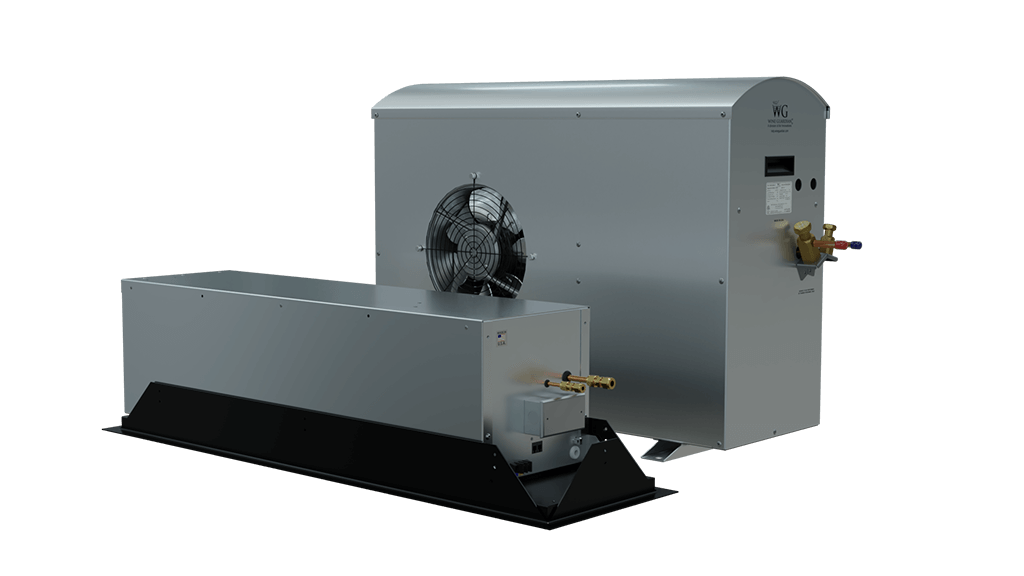
A ductless split system separates the evaporator (inside the cellar) from the condenser (outside the cellar), connected by refrigerant lines—no ductwork needed. This option provides the power and flexibility of a split system without the ductwork, and it is a popular choice for homeowners who want a sleek cellar interior.
Pros:
- No ductwork needed
- A condenser can exhaust heat outside
- Quieter than TTW units
Cons:
- Refrigerant line installation requires an HVAC technician
- A two-component system requires more planning
- Higher initial cost than self-contained options
Cabinet Cooling Systems

Wine cabinet cooling systems are purpose-built for freestanding wine storage cabinets, as they don’t require wall penetrations or ductwork. These compact, fully self-contained units require no ductwork or drain line connections and offer the flexibility to be installed either at the top or bottom of the cabinet. Built for precise temperature control, cabinet cooling systems are ideal for wine cabinet designers and smaller spaces where a dedicated cellar room isn’t an option.
Best for:
- Renters or homeowners with small collections
- Display collections in hospitality settings (bars, restaurants, and hotels)
- Supplemental storage alongside a primary cellar
FAQ: Choosing the Best System for Your Space
Several factors drive the decision:
- Whether your space is a cabinet or a cellar
- Cellar location and size
- Collection scope
- Room construction (insulation R-value, glass area)
- Aesthetic considerations
- Budget
- Noise levels
- Energy efficiency and operating costs
Larger or high-value collections typically need ducted or split systems for tighter climate control. Smaller rooms and casual storage work fine with self-contained or cabinet units. Use our wine cellar sizing and ductwork calculators to determine the right cooling system type and size for your collection.
To an extent, yes. Wine Guardian’s remote sensors and controls let you monitor your cellar’s temperature and humidity from another spot in your home, such as the kitchen or office, and will sound an alarm if conditions drift out of range. It’s an easy way to keep tabs on your collection without constantly checking the cellar itself.
Learn More About Wine Guardian’s Types of Wine Cellar Cooling Systems
Wine Guardian has engineered precision cooling for residential and commercial wine cellars for over 20 years, with every system designed specifically for wine storage. If you’re weighing the five types of wine cellar cooling systems for your space, contact our team for further sizing and application guidance, or connect with a distributor.